Influencer marketing is on the rise. Many brands are working with Micro-Influencers to promote their products or services.
The world of influencers is categorised into Nano (1k to 10k followers), Micro (10k-100k), Macro (100k-1 Million), and Mega or Celebrity (over 1 Million). Working with them can benefit your marketing. But choosing the right one is the key. While Macro and Mega influencers have more followers, they can be the most expensive. Nano may work, but they have limited followers. The best bet would be Micro influencers who have a good number of followers and may fit your budget.
No wonder their market segment is projected to surpass their counterparts with a million followers.
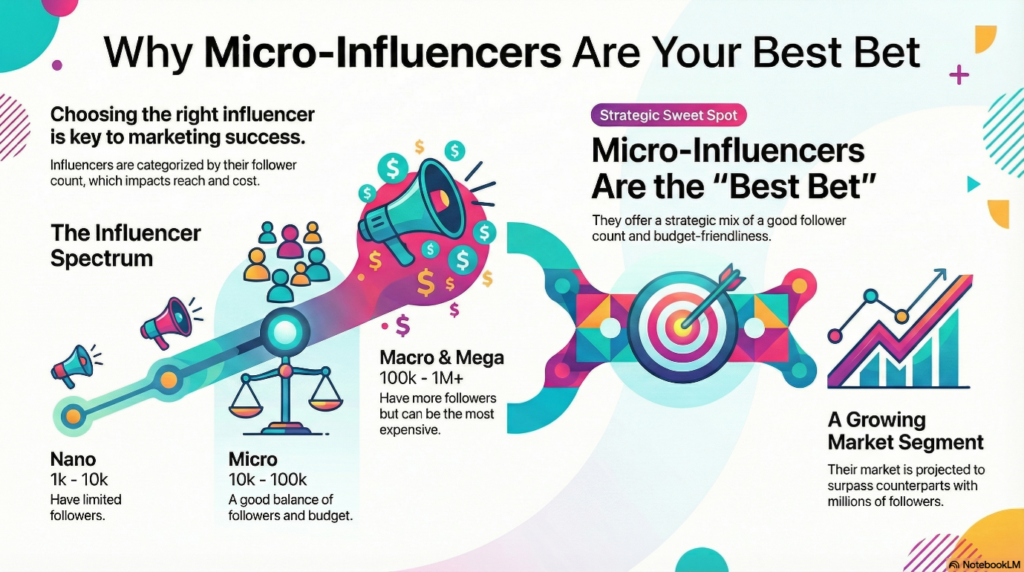
(Alt Image Text: The Micro Influencer Market Infographic)
Factors Contributing to the Rise of Micro Influencers
The Credibility Factor:
Credibility is the currency of marketing, and micro-influencers are minting it every day.
When a consumer views an influencer as relatable and similar to themselves, the endorsement becomes far more convincing. It is something like a friend or a peer telling their own personal experiences.
A Peer-to-Peer Connection
The endorsement becomes much more convincing when a consumer thinks about an influencer as a person close to him or her.
According to several studies, micro-influencers create an essential sense of parasocial interaction. Para-social interaction is the psychological closeness that individuals develop towards media personalities, which seriously boosts the acceptance of the message and the perception of credibility.
This perception difference is very high. Research has discovered that customers are very sensitive to the persuasive value of an endorsement.
A macro-influencer can market a product, and more consumers will tend to understand the message as a commercial exploitation of popularity. On the other hand, when it comes to a micro-influencer, the message is usually seen as a personal and high-quality recommendation.
Increased Trust Ratings and Credibility.
The figures clearly point out that smaller groups breed better trust. Several studies have revealed that micro-influencers are always more effective and more trustworthy to their consumers compared to macro-influencers.
According to one study, over 70% of individuals have more trust in micro-influencers than in traditional ads, which proves that a significant change in the way audiences perceive marketing has already taken place.
Moreover, micro-influencers have much higher rates of engagement.
Although activity levels differ, it is usually reported that micro-influencer platforms such as Instagram and TikTok achieve a sound engagement rate.
This high level of interaction relies on rich comment threads and direct Q&A. It reinforces the community bond and increases the influencer’s impact on consumer buying behaviour.
Authentic Content and Niche Expertise
To become a good influencer, one should have expertise in one’s domain. Instead of catering to a wide range of audiences, they have their nice community—be it fashion, vegan cooking, technical software, DIY hacks or gaming.
Targeting Niche Markets
Micro-influencers are specialists in their specialised areas, making them efficient to target niche markets.
By having efficient micro influencers on their side, brands can stand out to convey a tailored message to the most responsive group. This is because these influencers are seen as a kind of expert in their field by their audience.
This niche of influencers is really useful for new or smaller brands looking to appeal to particular demographics.
For example, a micro-influencer tells the specifications of a smartphone, testing its gaming, sound, and camera quality. Such a campaign is likely to generate immediate sales and pre-orders from their purchase-ready audience. A celebrity who casually mentions the product would be ignored because the audience demands technical depth and authenticity only a specialist can provide.
Lifestyle-Integrated Content.
The content produced by micro-influencers is less commercial and more of a real and organic aspect of their lifestyle.
As an alternative to high-production advertisements, the micro-influencers incorporate the item into their own story, providing real-world examples, tips, and personal experience. This authenticity is now a trait most customers look for when they learn about new brands. It is easy to see why. After all, consumers want to know how the products fit into their lives.

(Alt image text: micro influencer benefit infographic)
Sectors Where Micro-Influencers Shine: The Power of Niche Authority
Beauty and Fashion: The Peer Review Power.
The beauty and fashion business is built on the visual demonstration, the review and the personal validation. Micro-influencers are often seen as invaluable sources of advice and far more credible in these domains than a distant celebrity.
Developing Relatability to Build Trust.
A consumer of beauty products is likely to have many queries on mind while using the products, whether it is the application of serum or making their minimal makeup look best. That’s why they turn to a real-life expert offering practical pieces of advice. This practice is termed as demonstrating “performable authenticity” (A Comprehensive Overview of Micro-Influencer Marketing, 2024).
Studies on Instagram users of such niches indicate that the audience will tend to believe a micro-influencer more because of his/her perceived relatability, consistency, and authenticity.
A micro-influencer shows how a product fits into everyday life, unlike a macro-influencer promoting a luxury brand that may feel out of reach, making the purchase decision practical rather than aspirational.
This approach made followers feel like they were part of the brand, not just watching ads. As a result, they trusted recommendations from people like themselves more than traditional advertising. This works well because micro-influencers usually drive more sales and actions on social media than larger influencers (Research & Metrics, 2025).
Case Study: Niche Beauty Brands.
Brands such as Glossier, which has a community-based approach, have successfully leveraged this model.
They tapped into various, hyper-specific beauty communities by working with a large number of micro-influencers and beauty bloggers instead of hiring big celebs.

(Alt Image Text: Micro Influencers Top Sectors Infographic)
Food and Beverage: The Home Kitchen Authenticity.
The credibility of the food industry is related to the taste and practical application. Overly polished food or slick advertisements may not work to appeal to many consumers who prefer genuine enjoyment and practical application.
Personalised and Trustworthy Content.
Micro-foodie influencers—whether they review local restaurants, create vegan dishes, or share keto recipes—succeed because audiences view them as passionate experts within their niche communities.
Food content on platforms like Instagram generates much higher engagement than average, showing strong audience interest. When a micro-influencer shares a recipe using a specific spice or drink, audiences see the promotion as an honest personal choice—a form of electronic word-of-mouth (eWOM)—rather than a simple transaction.
Localised Targeting:
In the case of food and beverage brands, local campaigns are essential to use micro-influencers. For example, Coca-Cola has worked with micro-influencers for their #Cokeambassador campaign.
Technology and Gadgets: The Credibility of Deep Expertise.
The technology sector, especially for complex or specialised gadgets, demands high informational credibility.
Unboxing, Review, and Education.
Audiences typically perceive micro-influencers in the technology industry as experts in their specific areas, whether it’s mechanical keyboards, smart home security, or video editing software. Their videos usually involve extended unboxing, stress tests, and breakdown of features.
For example, when a fan of a micro-influencer views a 15-minute video review of the advantages and disadvantages of a new wireless router, they are getting a comprehensive consultation with a person whom they view as a tech expert.
This depth of content is an important factor affecting the purchase intention of high-value products because the influencer offers the knowledge and skills that the followers trust in before spending a lot of money.
Lifestyle and Health: The Strength of Customised Narratives
The vast lifestyle and health sectors–which include fitness, travel, home decor, and sustainability–rely on the ability of the influencer to present an achievable and relatable life.
Developing Stronger Emotional Relationships.
The success of micro-influencers in these areas is based on the fact that they build more emotional ties and show that the product is a part of the philosophy of their authentic lives.
Sustainable Living:
A brand that promotes zero-waste products is more likely to succeed with a micro-influencer who genuinely lives that philosophy in real life than with a celebrity whose content is broad and diversified.
When the influencer, the brand, and the audience share similar values, the message feels genuine and easy to believe. This kind of honest storytelling helps build loyalty and encourages people to buy.
Fitness and Wellness:
A micro-influencer from the health and fitness industry sounds more convincing than a celebrity. For example, a bodybuilder selling supplements or gym equipment will be perceived as more reliable than any movie star.
The High ROI: The Financial Side
The micro-influencers ensure a better ROI, thanks to their low price and high engagement rate.
It has been shown that the return on investment of micro-influencer campaigns can be higher than that of macro-influencer partnering. Through partnerships with niche experts rather than a single costly celeb, brands are using their budget to the fullest and increasing their messaging to various communities and, above all, creating a reputation based on trust.
The Bottom Line:
The rise of micro-influencers can be attributed to a fundamental consumer tendency: authenticity over hype. In this ever-increasing, saturated digital world, the voices that cut through the noise are not the loudest, but the most trusted. And that’s exactly what an efficient micro-influencer is.
Brands that make them part of their campaigns can successfully cultivate deep community loyalty, drive real-world conversions, and thrive in the ever-evolving digital landscape.