You must have a website in English.
After all, it is a global language, meaning that your website will be seen and understood across the world. Right? If you haven’t considered yet to show your website in other languages, you need to think again. Maybe you are leaving money on the table.
Contrary to popular belief, English makes up just 26% of internet searches. Creating a website in multiple languages or serving multilingual content can help your brand appear in the search results of users across the globe. To amplify the reach of your content, consider another ingredient—keep it short. It creates a powerful blend of multilingual content that is easy to digest and engaging as well.

Let’s walk through how multi-language micro-content can help you get love, likes and shares from the communities around the world.
What is Multi-Language Micro-Content?
Micro-content refers to short, easily digestible and highly focused information. Imagine it is a snack-sized bite of information. Examples include:
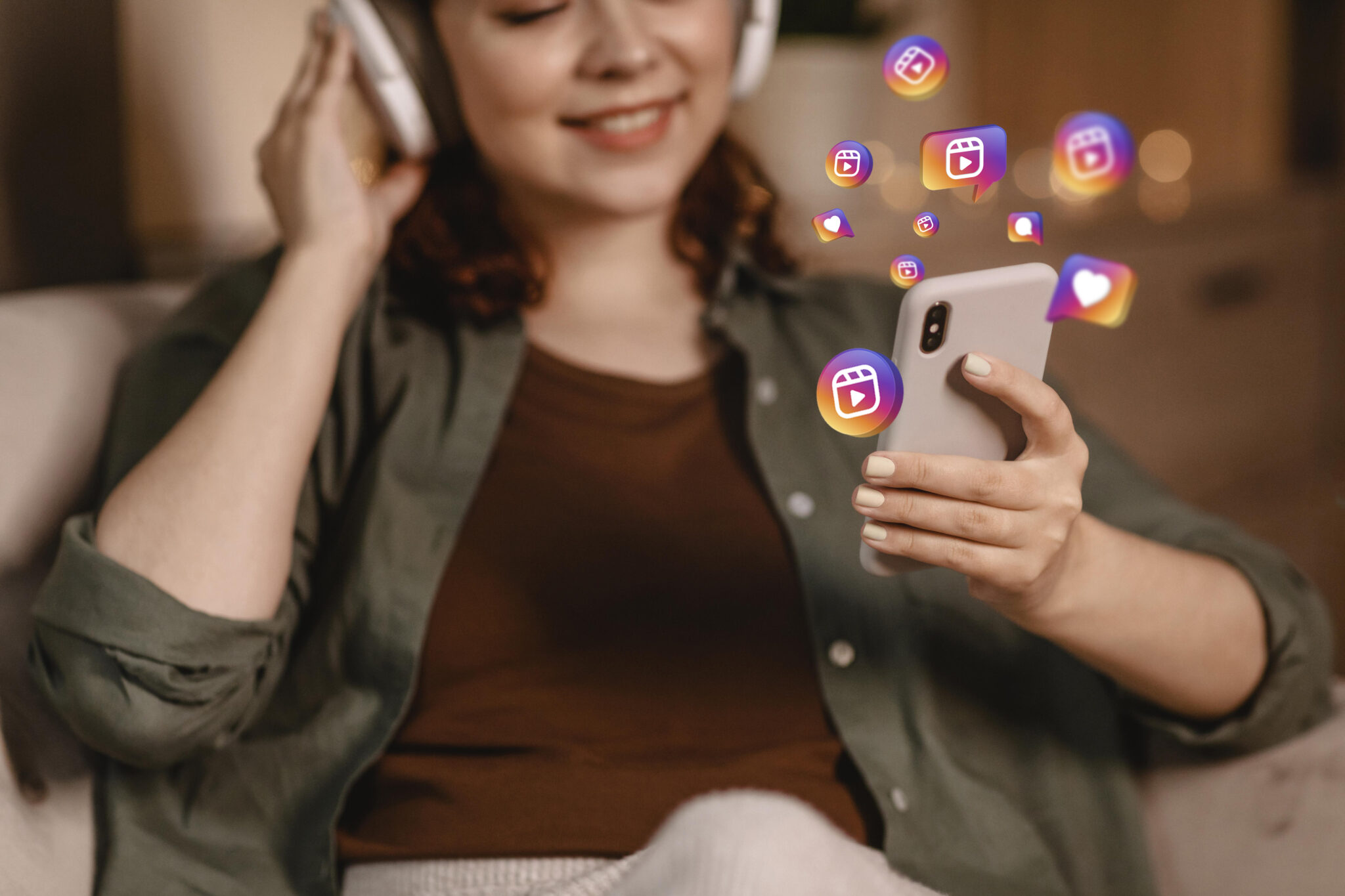
- Instagram Reels or TikToks.
- Quick “How-To” graphics (Infographics).
- Short status updates or “X” (formerly Twitter) posts.
- Brief email newsletters.
When you make this content multilingual, you aren’t just translating words. You are adapting these “snacks”, so they taste right in every culture.
Why Language Matters (Even for Short Content)
You might think, “It’s just a 10-second video, do I really need to translate it?” The answer is a resounding yes.
Based on the wide research conducted by CSA Research, the largest contributor to consumer trust is language.
Their study titled “Can’t Read, Won’t Buy” discovered that 65 per cent of the population likes reading in their own language, even if it is not written well. Above all, 4 out of every 10 users will never purchase a site that is not in their language. The report further reveals that companies lose 40% of business opportunities just because they fail to localise their buying process.
When you provide micro-content in a user’s native tongue, you remove the “mental tax” of translation. It makes your brand feel local, safe, and respectful.
The Power of “Short” in an International Market
Our attention span is decreasing. The average consumer attention span has dropped to nearly 8 seconds, as found by ResearchGate. And it is just one second less than that of a goldfish.
Micro-content is ideal to fit in this window. When you integrate this brevity with a user’s native language, the engagement results are massive.
- Greater Retention: Users are 52% more likely to finish a short video than a long one.
- Improved Shareability: Studies show that emotionally relevant, short-form content is shared 75% more frequently.
- Algorithmic Boost: Instagram and TikTok favour the content that achieves quick wins (likes and shares within the first few minutes). Localised content achieves these wins at a quicker rate since it is relevant to the local community.
(Also Read: Why Short Form Videos Dominate Today)
3 Pillars of Micro-Content High-Engagement.
In order to ensure that your multi-language strategy is effective, you must pay attention to three factors: Context, Culture, and Consistency.
Cultural Adaptation (Beyond Translation)
A literal translation can sometimes be a disaster. For example, thumbs-up is a normal gesture in the USA, but it is offensive in some parts of the Middle East. Here comes another example.
In 1970, American Motors launched a car called “the Matador”. While the name sounded impactful in English, it literally means killer in Spanish. No wonder that driving a car with such a name didn’t go well with their Spanish audience. This is a legendary lesson on why cultural adaptation matters more than just translation.
Key Tip: Use “Transcreation.” This means re-imagining the creative hook so it fits the local culture while keeping the same message.
Visual Communication
Micro-content relies heavily on pictures. Use universally familiar icons and images. When text-on-screen is being used in a video, make sure that the font has the capability of supporting other characters (such as Cyrillic, Arabic, or Kanji) and that the text does not obstruct other key areas of the image.
Mobile-First Design
Over 83% of social media ad spend is projected to be mobile-based by 2030.
Therefore, make sure your multi-language micro-content should have:
- Vertical (9:16): For phones.
- Subtitles: 8 out of 10 people watch mobile videos without sound.
- Quick Loading: Store files small in areas with low internet.
How to Scale Without Burning Out
It is quite overwhelming to produce content in five or ten languages. Here is how it can be done precisely without wasting too much time.
The “Global First” Framework
Instead of creating a video for Australia first and then trying to fix it for China, develop the original video with localisation in mind. Here’s how…
- Do not use slang that can only be used in a single country.
- Insert white space in your graphics when you have more words in a language. For example, the English phrase “Speed Limit” is only 11 characters long. However, when it gets translated into German, it becomes “Geschwindigkeitsbegrenzung”, which is a 26-character phrase. If you create a graphic or a button that fits “Speed Limit”, the German word will literally overflow the box, overlap with images, or become too small to read. Therefore, always leave a 30% empty (white) space around the English text.
- Use a good Translation Management System (TMS) to maintain your brand voice in every region.
Use AI Wisely
AI is producing incredible results, whether it is producing a video or audio. AI can help refine your dubbing and subtitling, localising for your target audience.
While AI can be used to produce base translations, a human native speaker should always review the “vibe” and the slang before publishing.
Common Mistakes to Avoid
Comments Ignored:
When you post a video in Spanish, expect to receive comments in Spanish. A two-way conversation is necessary with high engagement.
Machine-Only Translation:
Do not trust automated tools for public-facing content. A single ill-chosen word may turn a viral hit into a PR crisis.
Not focusing on Local Platforms:
You should not only rely on Instagram. In some regions, the actual engagement happens on platforms such as WeChat, Line, or Telegram.
How to Make Your Website Multilingual
First things first, ask yourself if your business serves a client base worldwide. Once you have figured out your key regions and their local languages, you can get started with the technical setup by installing a translation plugin like Smartling, Weglot or WPML for WordPress. However, don’t rely on automation alone. Take the extra step to hire a professional human translator to ensure your content is not just translated, but accurate and culturally resonant.
Ready to Achieve Big Results with Small Content?
Multi-language micro-content is no longer something to be associated with big global companies only. Any brand can communicate with the world by using the right strategy and tools. You are not just reaching an audience, but you are creating a community by making your message concise, culturally appropriate and linguistically correct.
The future of the internet is local. Do you speak their language?