
Remember the good old days of online privacy? No, me neither.
Internet browsing has always been tracked by tiny digital spies known as “cookies”.
Cookies track what we do online, what we click, and what we buy. This data is then used by companies to determine what we might want to buy next. That’s why it often leads to those slightly creepy ads, making us think that our devices are reading our minds.
But guess what? The cookie is crumbling! Several web browsers, like Safari, Firefox, and Brave Browser, have phased them out. Then there are new privacy regulations making it challenging for companies to collect data without their customers’ permission. This is a massive shift. While this is a positive sign for customers’ privacy, it may make businesses wonder how they will ever understand their customers again.
This is where zero-party data comes in. It is a piece of information that a customer willingly and proactively shares with a company.
Understanding Zero-Party Data: The Revolution of Asking Nicely
For a long time, businesses relied on first-party data generated when someone visits their website or app, as well as third-party data (information bought from other companies, often through cookies). Although first-party data remains absolutely invaluable, the loss of third-party cookies has created a significant gap.
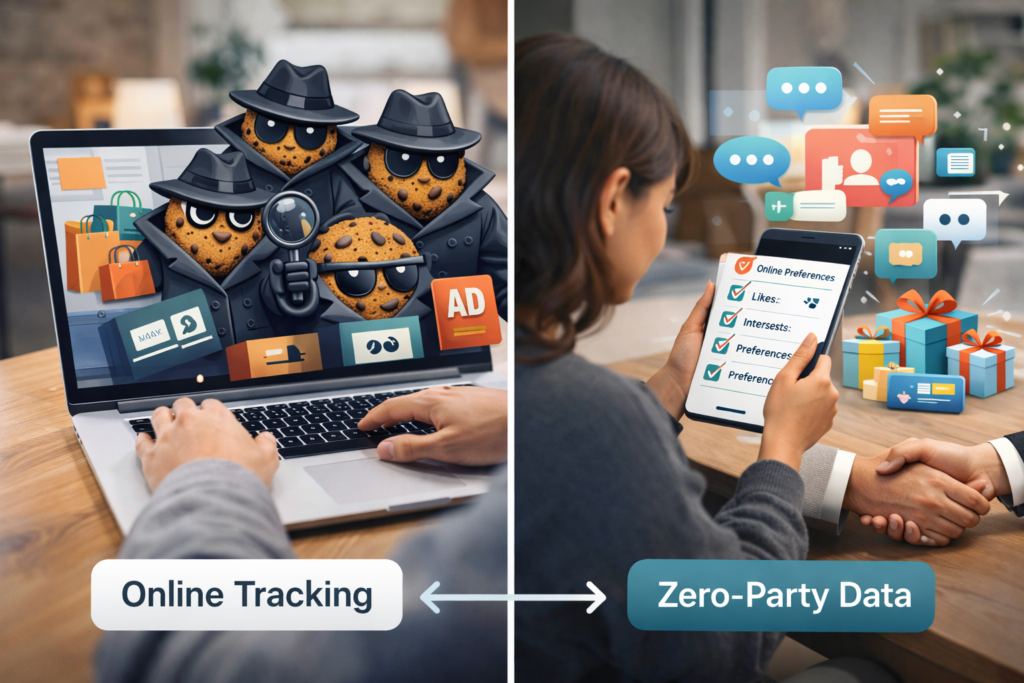
Zero-party data fills this void, providing a potent, ethical, and increasingly necessary means of getting to know customers more deeply.
It is information that a person willingly and actively shares with a company. Unlike cookies that track behaviour without asking, zero-party data comes directly from the consumer. This could include:
- Preferences (what you like)
- Interests
- Purchase intentions
- Answers to surveys or quizzes
- Communication preferences
The term was first popularised by analyst firm Forrester Research, which described zero-party data as information a customer intentionally and proactively shares with a brand.
Why Zero-Party Data is a Win-Win
For Customers: They are in charge of their privacy. They determine what information they post and why.
For Businesses: They receive the real, clear information directly from the source- their customers! It leads to increased personalisation and the ability to market effectively, without the privacy headaches.
A survey done by Forrester Research showed that brands using a zero-party data strategy experience higher customer engagement and retention rates. Major browsers like Safari and Firefox block third-party cookies by default. This shift has made third-party cookies far less reliable and pushed companies to explore alternatives.
What Does Zero-Party Data Mean in the Real World?
“What’s your favourite colour?” – Imagine a clothing company requesting you this, as soon as you have opened their site. When you say blue, they will be able to display more blue objects, rather than just guessing.
“How often do you like to receive emails from us?” – A newsletter sign-up that lets you choose daily, weekly, or monthly updates. This respects your inbox and makes you more likely to stay subscribed.
What are your skincare issues? – A beauty brand that asks whether you are looking for products for dry or oily skin. This will enable them to prescribe really relevant products.
What is your dietary restriction of choice? – A food delivery application that allows you to specify whether you are a vegetarian, vegan, or gluten-free. They can then send you deals that actually interest you.
What are your top three places to travel? – A travel company or airline is inquiring about your dream trips. They can then deliver you deals that actually interest you.
The point is to ask direct questions to your customer so that you can serve them better.
The Science behind Why it Works: Trust and Transparency
One study published in the Journal of Consumer Research stressed the role of transparency in data collection. According to its key findings, consumers are likely to share more information when they are made aware of the purpose of collecting their data and how they will use the data. Zero-party data inherently offers this transparency.
Perceived control is another important factor. According to the research of MIT Sloan Management Review, when people feel that they can control their personal information, they are more likely to participate in data-sharing practices. Zero-party data places the power directly into the consumer.
The Way Businesses are Getting Started with Zero-Party Data
Although surveys are an excellent medium to start, businesses are gathering zero-party data in a great number of creative ways:
Interactive Quizzes:
“Which coffee blend is your perfect?” or “What is your style personality?” These are fun and engaging ways of getting preferences.
Preference Centres:
A dedicated section within a site or within an app that allows customers to control their communication preferences and product interests, and even update their profile information.
Contests and Giveaways:
Asking for specific preferences as part of an entry form. For example, “Tell us your dream vacation for a chance to win!”
On-site Polls and Feedback Forms:
Basic questions on a webpage regarding customer experience or product preferences.
Customer Service Interactions:
Training customer service reps to ask relevant questions that can be recorded and used to improve future interactions and offerings.
The Benefits Are Huge (and Ethical!)
Hyper-Personalisation:
When you have the data on what your customers want, you can create personalised experiences, suggestions, and communications. It is not simply a matter of putting their name in an email, but rather showing them products they genuinely need or sending offers they’ll appreciate.
Greater Customer Loyalty:
When customers feel that they are understood and valued, they will be likely to stick around. The sharing of data involves a feeling of collaboration.
Better ROI in Marketing:
There is no need to spend money on advertisements for products that your customers do not want. Zero-party data will help you make your marketing much more direct and efficient.
Better Customer Relationships:
Businesses build trust by being open and respectful of privacy. Any long-term customer relationship is based on this trust.
Ethical Data Collection:
With the ever-increasing sensitivity of privacy in the world, zero-party data is the most ethical means of collecting insights. It is not about being watched but establishing a relationship founded on consent and value.
According to a report by Accenture, consumers are worried about data privacy, but they are also ready to provide data to get personalised services and experiences. The point is that they want power to control what they provide and get the clear value in response. Zero-party data is the ideal fit to this paradox.
The Road Ahead: Creating a Trustworthiness Foundation.
The shift to a cookieless world is not a threat, but an opportunity. It encourages a business to become more creative, transparent, and customer-focused.
Zero-party data is not just a workaround. It is a better approach to developing deep and meaningful relationships with customers. Companies that embrace “asking nicely” and genuinely listen to their customers will be the ones that thrive.
So, as the cookies crumble, let’s welcome a new era of genuine connection and consent in the digital world. It’s better for everyone.