Your customers already ask ChatGPT what to buy, which service to hire and which brand to trust. So will your brand be there when they ask? Until recently you couldn’t pay to make that happen. Now you can.
OpenAI rolled out ChatGPT ads in India in late August 2026. Self-serve buying opened to businesses on September 4, and daily budgets start at ₹725. India is also now ChatGPT’s largest market by weekly active users, according to OpenAI India’s managing director. That means a huge audience, a low entry price and very few competitors so far.
But a new ad platform doesn’t give you results just for showing up early. The brands that win here will be the ones that understand how these ads work before they spend money on them.
“The first brands on a new platform don’t win because they arrived early. They win because they learned faster.”
Let’s look at how ads inside ChatGPT work and how your brand can prepare for them.
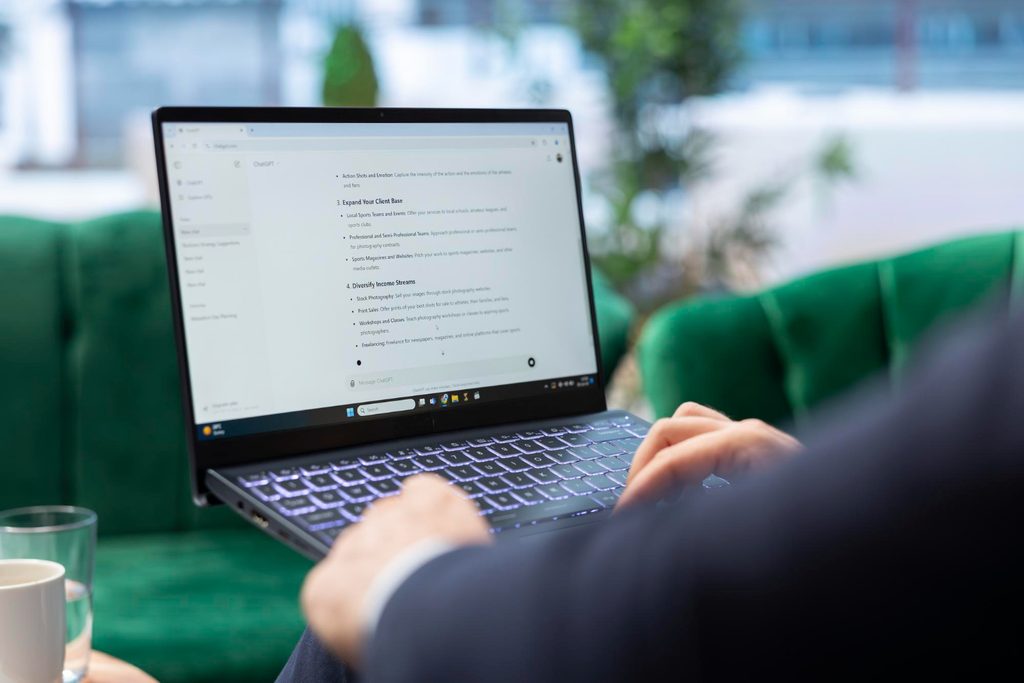
What Are Ads Inside ChatGPT?
Ads inside ChatGPT are paid listings that appear below the AI’s answer when the conversation matches what an advertiser sells. Each ad is labelled as sponsored and kept visually separate from the reply.
Here’s how that looks in practice. A user asks:
“What’s a good skincare routine for oily skin in Mumbai’s humidity?”
ChatGPT answers the question in full. Under that answer, a skincare brand’s sponsored listing might show up with a link to its oil-control kit.
OpenAI says ads do not influence ChatGPT’s answers. The ad sits beside the answer and has no say in what the answer contains.
Formats live or in testing in 2026 include:
- Sponsored listings below answers, the main format live in India
- Sponsored Agents, which let users chat with a brand’s own AI agent after clicking (being tested with select US advertisers)
- A visual ad format inside image generation, announced in October for a first group of advertisers
Why Conversational Ads Are Different From Search Ads
A search ad catches someone who is still looking. A conversational ad reaches someone who is already halfway to a decision.
A typical Google journey looks like this:
Search, see links, click, compare, decide.
A ChatGPT journey is shorter:
Ask, get an answer, see a relevant ad, decide.
If you want the steps to read more like a sequence, here are two other options:
With “then”:
A typical Google journey looks like this: search, then see links, then click, then compare, then decide.
A ChatGPT journey is shorter: ask, get an answer, see a relevant ad, then decide.
By the time your ad appears, the user has already explained their problem, their budget and sometimes their city. That’s why conversational ad placements need a different approach.
| Factor | Google Search Ads | Ads in ChatGPT |
| Targeting | Keywords | Conversation context |
| User mindset | Searching for options | Already mid-decision |
| Ad position | Above or below results | Below the AI’s answer |
| Search terms report | Yes | No |
| Minimum budget (India) | None | ₹725 per day |
| Platform age | 20+ years | Under a year |
How Do ChatGPT Ads Work?
You don’t bid on keywords. You describe the topics your ad fits using “context hints,” set a bid, and OpenAI’s system decides when your ad appears.
According to OpenAI’s advertiser documentation, summarised by SEMoptimize, the setup looks like this:
- Context hints are set for each ad group and aren’t matched word for word.
- Bidding runs on cost per click (CPC) or cost per thousand impressions (CPM).
- Tracking uses a browser pixel and a server-side Conversions API.
- Reporting shows impressions, clicks, spend, CTR, CPC, CPM and conversions.
Who sees the ads? Only logged-in adults on the Free and Go plans. Plus, Pro, Business, Enterprise and Education users see no ads at all. Ads are also not shown to users under 18 or next to sensitive topics like mental health and politics.
What about privacy? Advertisers don’t get access to chats, memories or personal details. They only see campaign totals.
“You’re no longer buying a keyword. You’re buying a moment in someone’s thinking.”
Which Businesses Should Advertise First?
Brands whose customers research before they buy will benefit first. People bring ChatGPT comparisons, big purchases and “how do I” questions, and those are the moments where a relevant ad helps them choose.
| Business type | A typical ChatGPT question | What to promote |
| D2C skincare | “Routine for oily skin in humid weather?” | A routine bundle page |
| Coaching institute | “How do I prepare for CAT in six months?” | A free study plan or demo class |
| B2B software | “Best GST billing software for small shops?” | A comparison page or free trial |
| Travel agency | “Five-day Kerala itinerary for a family?” | A ready-made package |
| Interior studio | “What does a modular kitchen cost in Pune?” | A cost calculator or consultation |
Some categories should wait. Under OpenAI’s ad policies (v1.6, September 2026), financial, health and legal services are restricted and approved case by case. Alcohol, gambling and political ads are not allowed at all.
What Does Advertising on ChatGPT Cost?
The minimum daily budget in India is ₹725. Clicks are priced through an auction, and OpenAI suggests a starting maximum bid of $3 to $5 for click campaigns. That’s a starting point, not an average price.
Here’s what’s been reported so far:
- During the US pilot, CPMs were around $60. They later fell toward $25 to $45, according to exchange4media.
- The same report cites a median Google Search CPC of ₹18 for Indian D2C brands in 2026.
- OpenAI says ChatGPT ads reached a $1 billion annualised run rate by August 31, 2026.
So clicks will probably cost more than search clicks in India. That makes planning before launch important. Let’s work through an example.
A Simple Test Budget Example
A coaching institute plans a 30-day test at ₹2,000 per day.
Assume the forecast suggests:
- Total budget: ₹60,000
- Average CPC: ₹250
- Estimated clicks: 240
- Landing page conversion rate: 10%
- Expected leads: 24
- Lead-to-student rate: 20%
- Expected enrolments: about 5
- Average course fee: ₹40,000
That’s roughly ₹2,00,000 in revenue from ₹60,000 in spend, a ROAS of about 3.3. These are assumptions for illustration, not platform benchmarks.
Don’t rely on one number, though. Build three scenarios:
| Scenario | Estimated Revenue | Ad Spend | Potential ROAS |
| Conservative | ₹80,000 | ₹60,000 | 1.3 |
| Expected | ₹2,00,000 | ₹60,000 | 3.3 |
| Optimistic | ₹3,20,000 | ₹60,000 | 5.3 |
If even the conservative case is acceptable, the test is worth running. To build forecasts like these from your own data, read our guide on predictive analytics tools for forecasting ad campaign ROI before launch.
Limitations: What This Platform Can’t Do Yet
ChatGPT advertising is promising, but it’s still young. Go in knowing its gaps.
- No search terms report. You can’t see the exact prompts that triggered your ad.
- Part of the audience is unreachable. Paid-plan users never see ads.
- Pricing is still settling. Rates shifted a lot during the first year.
- Category restrictions. Finance, health and legal brands face extra approval.
- Few benchmarks. OpenAI has no cross-advertiser performance data yet.
That’s why the smartest approach is a cycle, not a one-time bet:
Test, measure, compare, learn, scale.
“A new channel deserves curiosity, not blind confidence.”
How Businesses Can Start Preparing
You don’t need a big budget or a large team. You need a clear process.
Step 1: Set up tracking before launch.
Install the ChatGPT pixel and Conversions API, and keep your own first-party tracking running alongside them.
Step 2: List the questions your buyers ask.
Pull them from sales calls, WhatsApp chats, Google Business Profile reviews and support tickets. These become your context hints.
Step 3: Build answer-first landing pages.
If someone clicks after asking about kitchen costs, open the page with a price range. Don’t send them to your homepage.
Step 4: Write ads that continue the conversation.
Use plain, helpful language that picks up where ChatGPT’s answer stops. A hard sell feels out of place here.
Step 5: Keep ad groups tight.
Give each ad group one theme and its own UTM tag. Without a search terms report, this is how you’ll learn which contexts actually convert.
Step 6: Compare results with other channels.
Judge cost per lead and lead quality against Google and Meta, not just CTR.
Step 7: Keep investing in organic AI visibility.
Ads only reach Free and Go users. AEO and GEO work gets your brand cited in answers on every plan, so you need both.
Final Thoughts
Every new ad platform rewards the brands that take the time to learn it. Ads inside ChatGPT are still early in India. Pricing is still moving, reports are basic and most of your competitors haven’t run a single campaign.
That’s an opportunity, but only if you plan for it. Marketing on AI platforms is moving from:
“Let’s put money in and see what happens.”
to:
“Let’s understand the conversations our customers are having, and show up in the right ones.”
Brands that set up tracking, answer-first pages and focused ad groups now will know what works before the auction gets crowded. That’s when ChatGPT ads stop being an experiment and become a dependable growth channel.
Connect with iSonic Media and let’s build a ChatGPT advertising plan that brings your business measurable leads from day one.