For years, email marketing has helped businesses generate leads, nurture prospects, and drive conversions through newsletters, campaigns, and automated follow-ups. But Indian consumers are increasingly turning to WhatsApp to communicate, research, compare options, and make purchasing decisions. This shift is creating new opportunities for businesses to rethink traditional lead-generation strategies. WhatsApp funnels create structured, conversational journeys that guide prospects from initial interaction to qualification, follow-up, and conversion. Instead of simply sending promotional messages, businesses can use personalised conversations, automation, segmentation, and human support to encourage meaningful engagement and drive actions such as enquiries, bookings, consultations, demos, and purchases.
Instead of:
Ad → Landing Page → Form → Email → Follow-Up → Sales Call
a business can build a journey such as:
Ad → WhatsApp → Qualification → Personalised Response → Offer → Sales Conversation → Conversion
This shift can be particularly valuable in India, where mobile-first behaviour, conversational communication, regional languages, and fast responses can significantly influence how customers interact with businesses.
A Lead Doesn’t Always Need Another Form
Think about the last time you filled out a website form just to ask one simple question. You entered your name, phone number, email and requirement, and then waited. A WhatsApp funnel can shorten this journey by allowing the prospect to start a conversation immediately. From “What are you looking for?” to “Would you like to speak with an expert?”, every response can help understand intent and move the prospect closer to the next step.
Why WhatsApp Is Becoming Important for Indian Lead Generation
Indian consumers are highly accustomed to using WhatsApp for everyday communication. From speaking with family members and colleagues to contacting local businesses, service providers, retailers, educators, and professionals, WhatsApp has become part of the normal communication ecosystem. This creates an important advantage for marketers.
When a potential customer receives an email, several things can happen. The email may remain unopened, get buried under other messages, land in spam, or simply be ignored because the prospect is not actively checking their inbox.
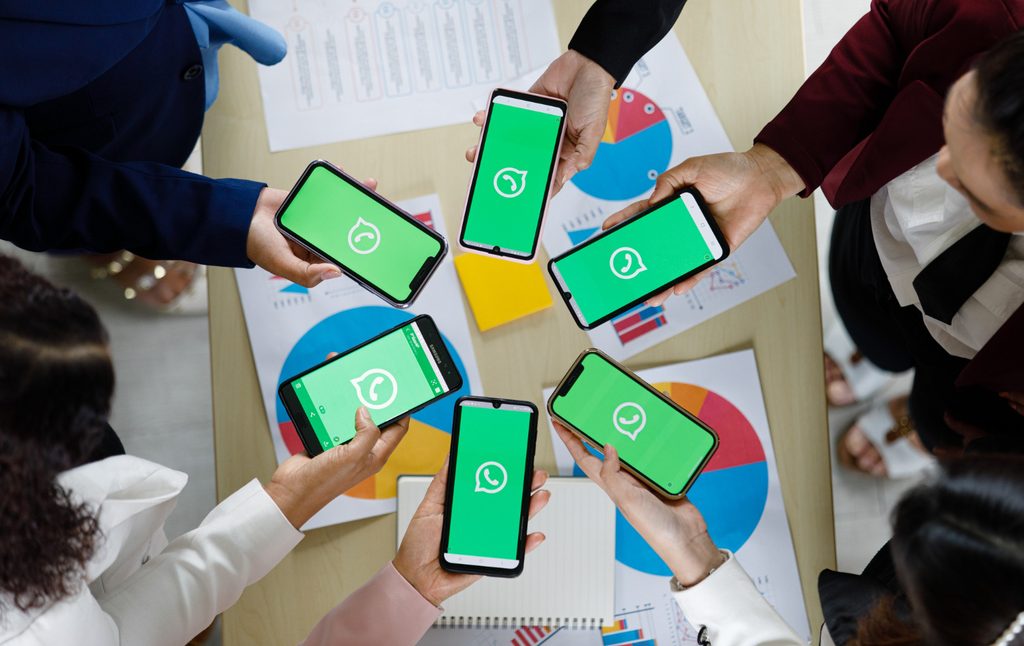
WhatsApp creates a more conversational environment. A prospect can ask a question, receive an answer, share a requirement, request a price, send a document, or speak with a salesperson without leaving the messaging environment. WhatsApp lead generation can turn everyday conversations into business opportunities. Instead of relying only on traditional forms or lengthy follow-ups, businesses can use WhatsApp to connect with prospects, understand their requirements and guide them towards the next action.
“Hi! Thanks for reaching out. Are you looking for clear aligners, dental implants, or a general consultation?”
- The prospect selects an option.
- The next message can provide relevant information.
- Then the system can ask:
- “Would you like us to help you schedule a consultation?”
- The journey feels less like marketing and more like a conversation.
WhatsApp Funnels vs Traditional Email Funnels
Email marketing is not disappearing. It remains useful for newsletters, detailed information, long-form nurturing, transactional communication, and audiences that prefer email. However, WhatsApp can complement, or in some lead-generation scenarios replace, parts of the traditional email funnel.
| Traditional Email Funnel | WhatsApp Funnel |
| Lead fills out form | Lead starts a conversation |
| Confirmation email | Instant WhatsApp response |
| Email nurturing sequence | Conversational follow-ups |
| Email CTA | Interactive response |
| Salesperson receives lead | Lead can be qualified automatically |
| Manual email follow-up | Automated reminders |
| Long-form communication | Short, contextual messages |
| Multiple clicks | Conversation-based journey |
The biggest difference is the communication model. Email generally follows a broadcast-and-response model, while WhatsApp can support a conversation-and-action model. This makes it particularly interesting for businesses where leads need clarification before making a purchase.
What Exactly Is a WhatsApp Lead Funnel?
A WhatsApp lead funnel takes a prospect through different stages based on their behaviour and responses.
A basic funnel can include:
1. Awareness
The customer discovers the business through Google, Instagram, Facebook, YouTube, an advertisement, an influencer, or another marketing channel.
2. Entry
Instead of sending the prospect to a generic homepage, the campaign gives them a clear option to start a WhatsApp conversation.
For example:
“Want a free consultation? Chat with us on WhatsApp.”
3. Qualification
The WhatsApp funnel asks simple questions to understand the lead.
For example:
- What service are you interested in?
- Which city are you located in?
- What is your approximate requirement?
- When are you looking to purchase?
- Would you like a consultation?
4. Personalisation
Based on the answers, the prospect receives relevant information instead of generic promotional content.
5. Conversion
The funnel guides the lead toward an action such as:
- Book an appointment
- Request a quotation
- Schedule a demo
- Make a purchase
- Register for an event
- Speak with an expert
6. Follow-Up
If the prospect does not convert immediately, automated or human follow-ups can continue the conversation. This creates a structured system instead of relying on salespeople to remember every lead. Effective WhatsApp funnels work best when every interaction feels relevant and timely. Learn how iSonic Media uses personalised lead nurturing strategies to engage prospects, strengthen relationships, and guide them towards conversion. Learn more about nurturing leads with personalisation at iSonic Media
Example: WhatsApp Funnel for a Dental Clinic
Imagine a dental clinic running Instagram and Google advertisements for clear aligners.
The advertisement says:
“Want to know if clear aligners are suitable for your smile? Chat with our dental team.”
The user clicks the WhatsApp CTA.
The first message could be:
“Hi! Thanks for contacting us. What would you like to know about clear aligners?”
Options:
1. Treatment Cost
2. Eligibility
3. Treatment Duration
4. Book Consultation
If the user selects Treatment Cost, the funnel can provide an appropriate response and then ask: “Would you like our team to help you understand the treatment options for your case?” The prospect can then be transferred to a human representative. The funnel has achieved several things:
Lead capture → Qualification → Information → Engagement → Sales opportunity
without requiring the customer to navigate multiple pages.
Example: WhatsApp Funnel for Real Estate
Real estate businesses can also benefit from conversational lead generation. Imagine an advertisement promoting a new residential project: “2 & 3 BHK homes starting from ₹XX lakh. Get brochures and pricing on WhatsApp.”
The prospect clicks the advertisement and enters WhatsApp. The funnel asks:
“What are you looking for?”
- 2 BHK
- 3 BHK
- Investment
- Site Visit
If the user selects Site Visit, the system can ask: “Which day would be convenient for you?” The lead can then be routed to the sales team. Instead of collecting a basic name and phone number, the business has already captured purchase intent.
Case Study: Turning Ad Leads Into Sales Conversations
Consider a hypothetical Indian education company offering professional certification courses.
The company previously used this funnel:
Facebook Ad → Landing Page → Lead Form → Email → Salesperson Follow-Up
The campaign generated leads, but the sales team frequently encountered low-intent prospects. Some people submitted forms simply to check the course price, while others never responded to subsequent emails.
The company redesigned the journey:
Facebook Ad → WhatsApp → Course Selection → Qualification → Counsellor
The WhatsApp funnel asked three questions:
- Which course are you interested in?
- Are you currently working or studying?
- When would you like to start?
The answers were used to segment leads. A student interested in immediate enrolment could be routed directly to a counsellor.
A prospect who was still researching could receive educational information and follow-up messages. A working professional looking for weekend classes could receive information about the relevant programme. The result was not simply more conversations. The company gained better context about each lead before the sales conversation began. This is the real potential of WhatsApp funnels: they can help businesses optimize not only lead volume but also lead quality and sales readiness.
Why Personalisation Matters in WhatsApp Funnels
Sending the same message to every WhatsApp contact can quickly make a funnel feel like spam. Personalisation should therefore go beyond inserting the customer’s name.
A better approach is to use behavioural information.
For example:
- Lead A: Interested in pricing
Lead B: Interested in product features
Lead C: Requested a demo
Lead D: Asked about availability
Each person should enter a different communication path. For a furniture business, someone who asks about sofas could receive:
“You were checking our 3-seater sofa collection. Would you like to see the available fabric and colour options?”
That is more relevant than: “Hello! Check out our latest products!” The objective is to make every message feel connected to the customer’s previous action.
WhatsApp Funnels Can Support Regional-Language Marketing
India is not a single-language market. A lead-generation strategy that communicates only in English may miss opportunities among audiences who are more comfortable in Hindi, Punjabi, Tamil, Bengali, Marathi, Telugu, Gujarati, Kannada, Malayalam, or other regional languages. WhatsApp funnels can support conversational communication in the language preferred by the customer.
For example:
“Aap kis service ke baare mein jaanna chahenge?”
can be more approachable for a Hindi-speaking prospect than a formal English message.
Regional-language messaging can be especially useful for:
- Local businesses
- Healthcare
- Education
- Real estate
- Financial services
- Retail
- Automotive
- Home services
The key is to use natural language rather than mechanically translated messages.
Where Email Still Makes Sense
Replacing traditional email marketing does not mean eliminating email completely.
Email remains valuable for:
- Detailed product information
- Newsletters
- Reports and guides
- Receipts and invoices
- Long-form educational content
- B2B communication
- Formal business communication
- Customer onboarding documents
The strongest strategy may therefore be WhatsApp + Email, rather than WhatsApp versus email.
For example:
WhatsApp: Immediate engagement and lead qualification
Email: Detailed information and resources
WhatsApp: Follow-up and conversion
Email: Confirmation and documentation
Each channel can perform the job it is best suited to handle.
How to Measure WhatsApp Funnel Performance
More Chats ≠ More Leads. More Qualified Conversations = Better Results.
Track the numbers that show what happens after someone clicks:
Click → Conversation → Qualification → Booking/Quote → Conversion
Key Metrics to Watch
- Conversation Rate – Are people starting chats?
- Qualification Rate – How many are genuine prospects?
- Response Rate – Are leads engaging?
- Booking & Quote Rate – Are conversations driving action?
- Conversion Rate – How many become customers?
- Cost per Qualified Lead – What are quality leads costing you?
- Revenue – Is the funnel generating business?
The real question isn’t “How many WhatsApp chats did we get?”
It’s “How many valuable sales conversations did those chats create?”
Ready to Build a High-Converting WhatsApp Funnel?
At isonic Media, we help businesses turn digital interactions into meaningful conversations and qualified leads. From WhatsApp funnel strategy and automation to personalized messaging, lead qualification, and conversion-focused campaigns, our team can help you create a system designed around your business goals. If you’re ready to move beyond traditional lead generation and build a smarter, conversation-led customer journey, contact us today to explore how WhatsApp funnels can help your business generate, nurture, and convert more leads.
Frequently Asked Questions
1. What is a WhatsApp funnel?
A WhatsApp funnel is a structured customer journey that uses WhatsApp conversations, automation, qualification, personalised messaging, follow-ups, and human support to move prospects from initial interest toward actions such as enquiries, bookings, consultations, or purchases.
2. Can WhatsApp replace email marketing completely?
Not necessarily. WhatsApp can replace or reduce the role of email in certain lead-generation and follow-up journeys, particularly when customers prefer conversational communication. Email remains valuable for newsletters, detailed information, documentation, and formal business communication.
3. Are WhatsApp funnels effective for Indian businesses?
They can be particularly useful for businesses serving mobile-first Indian audiences because WhatsApp supports fast, conversational communication. However, effectiveness depends on the offer, audience, funnel design, response speed, segmentation, messaging quality, and sales process.
4. What businesses can use WhatsApp lead funnels?
Almost any business with enquiry-driven sales can explore WhatsApp funnels, including healthcare, education, real estate, automotive, e-commerce, hospitality, professional services, financial services, and local businesses. The funnel should be customised according to the customer’s buying journey.
5. Should WhatsApp funnels be automated?
A combination of automation and human interaction is generally more effective than relying entirely on either one. Automation can handle initial responses, FAQs, qualification, reminders, and segmentation, while sales or service teams can take over when a prospect demonstrates high intent or needs personalised assistance.